Story 7 of 12 · United States of America · 1845 and 1861
Christmas in Their Own Words
Who it suits: Readers of twelve and over, and families who want to read and talk together.
Two writers who escaped slavery in the United States describe, in their own words, the Christmas week they knew before they were free. Their accounts are printed together here because they show two sides of the same week.
Frederick Douglass was born around 1818 in Talbot County, Maryland, and escaped to the northern United States in September 1838. He learned his first letters as a boy from Sophia Auld, in the Baltimore household where he was held, and then taught himself to read and write. He became one of the most powerful speakers of his century, and published Narrative of the Life of Frederick Douglass, an American Slave, Written by Himself in 1845. The extract printed here comes from the Christmas Douglass spent when his year with Edward Covey ended; Covey was a farmer to whom enslavers sent young men they wanted made submissive, and Douglass was sent to him for the year 1833. In this passage Douglass explains what the holiday week between Christmas and New Year’s Day was for, as he saw it: in his own phrase, the holidays served as “safety-valves”, to keep people from rising against slavery.
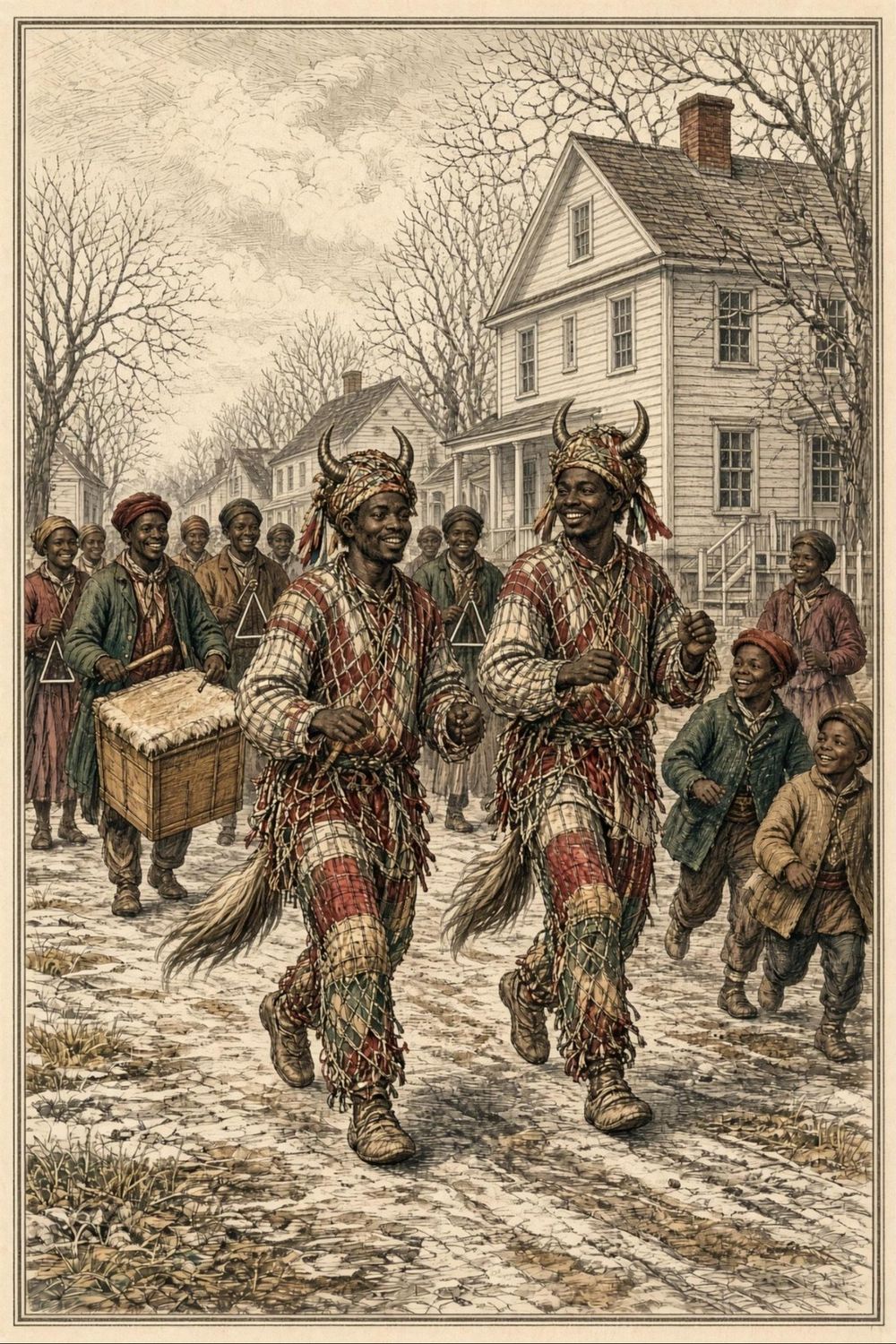
Harriet Jacobs was born around 1813 in Edenton, North Carolina. To protect herself and her children, she hid for nearly seven years in a crawl space above a storeroom in her grandmother’s house, a space about nine feet long and seven feet wide, too low to stand in. She escaped to the North in 1842 and published Incidents in the Life of a Slave Girl, Written by Herself in 1861, under the name Linda Brent. The chapter printed here, “Christmas Festivities”, describes her first Christmas in that hiding place. Through a small hole she made in the wall, she watched her children on Christmas morning, and she describes the Johnkannaus, the costumed musicians and dancers who went from house to house through the town.
Douglass describes the purpose behind the holiday. Jacobs describes the joy that people made within it. Read together, the two accounts give the week as the people who lived it remembered it.
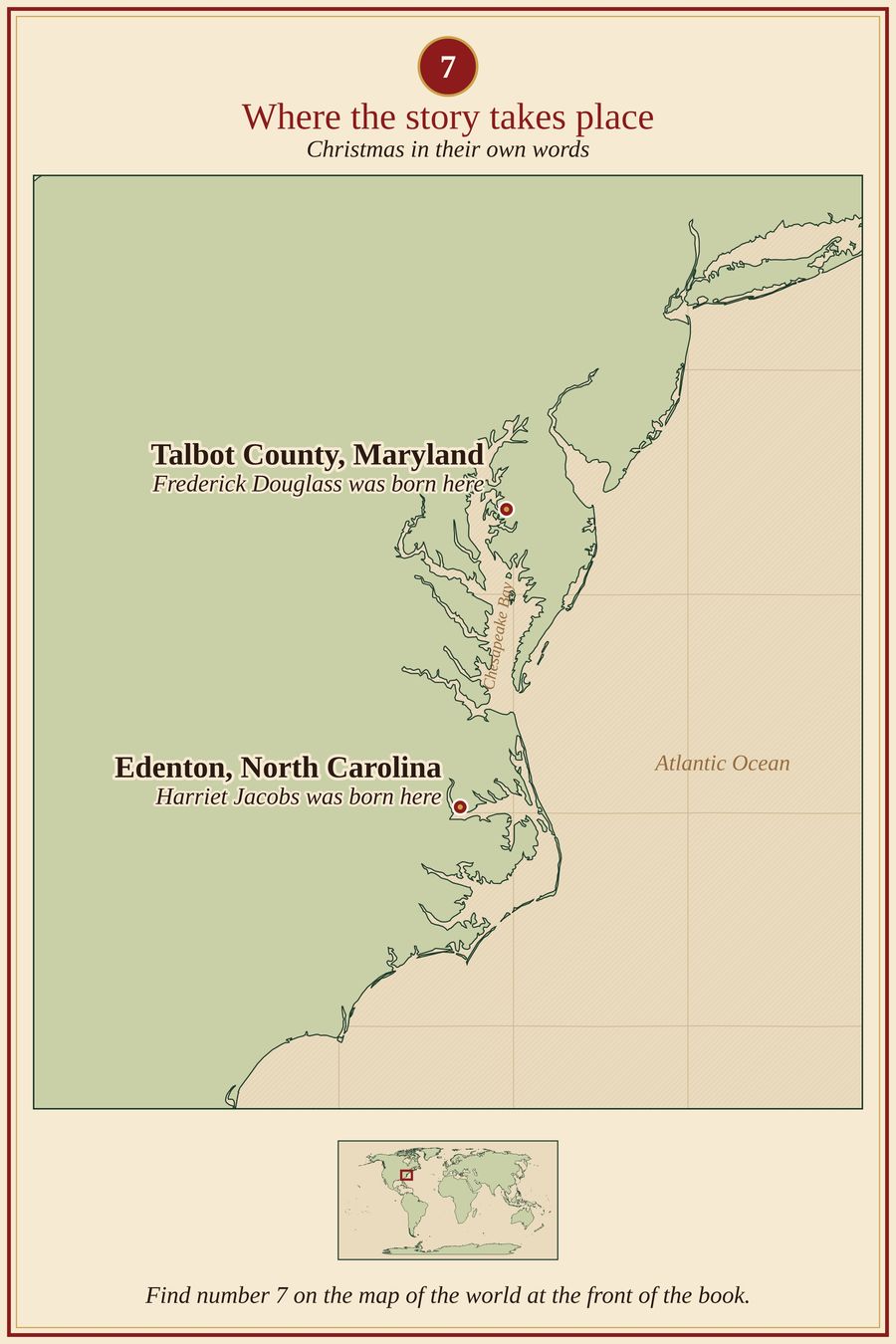
In the book, this chapter is printed in full with eight notes beside the words they explain, its map, its city view and its illustration.